
Friends of WARC
Applied research, codesigned with communities, to reduce chronic disease.
Patient self-screening integrated with remote monitoring
+ Click on the image to expand
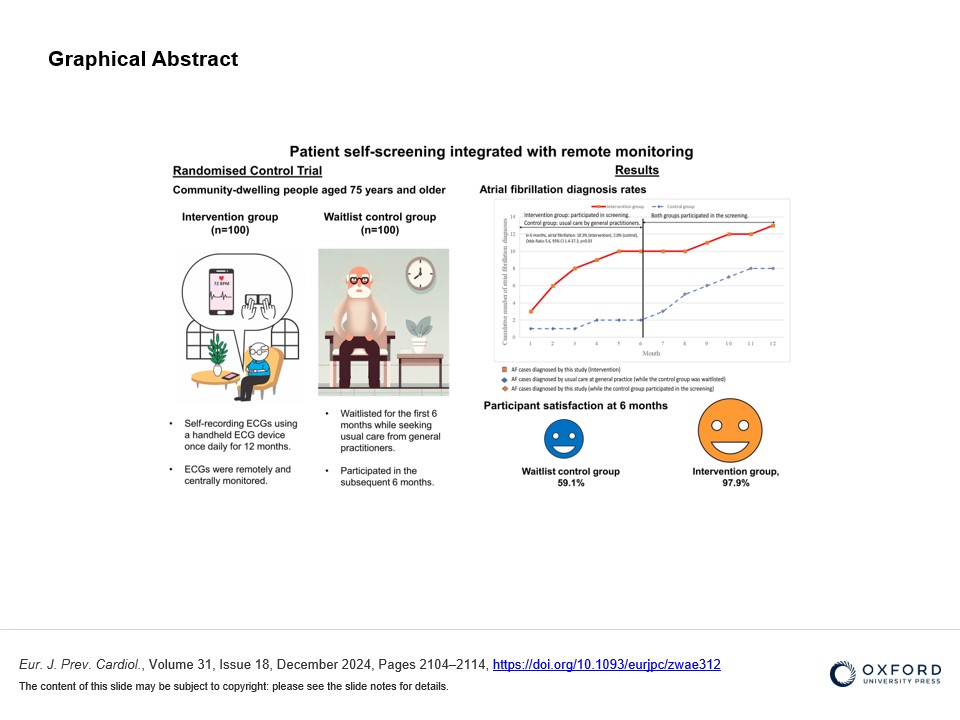
In this work we want to know
- More AF was found with selfscreening: 10 out of 97 people using the device were diagnosed with AF, compared with only 2 out of 100 receiving usual care.
- Most AF cases were found quickly: 80% were detected within the first 3 months.
- People liked the screening: Almost 98% of those using the device were satisfied with the screening process, compared with about 59% in the usualcare group.
- People used the device consistently: On average, participants recorded an ECG on 20 days per month, as expected.
- The device was easy to use:
- 93% felt confident using it
- 98% found it easy
- 96% felt the process was efficient
This is important because…
These results show that older adults can successfully and confidently check their own heart rhythm at home. This approach helped detect atrial fibrillation much earlier and more often than usual care alone, which could lead to earlier treatment and lower stroke risk. It also suggests that this kind of patientled screening could be integrated into existing healthcare systems to support early diagnosis and ongoing monitoring.
Community self-check kiosks for the detection and monitoring of blood pressure
+ Click on the image to expand
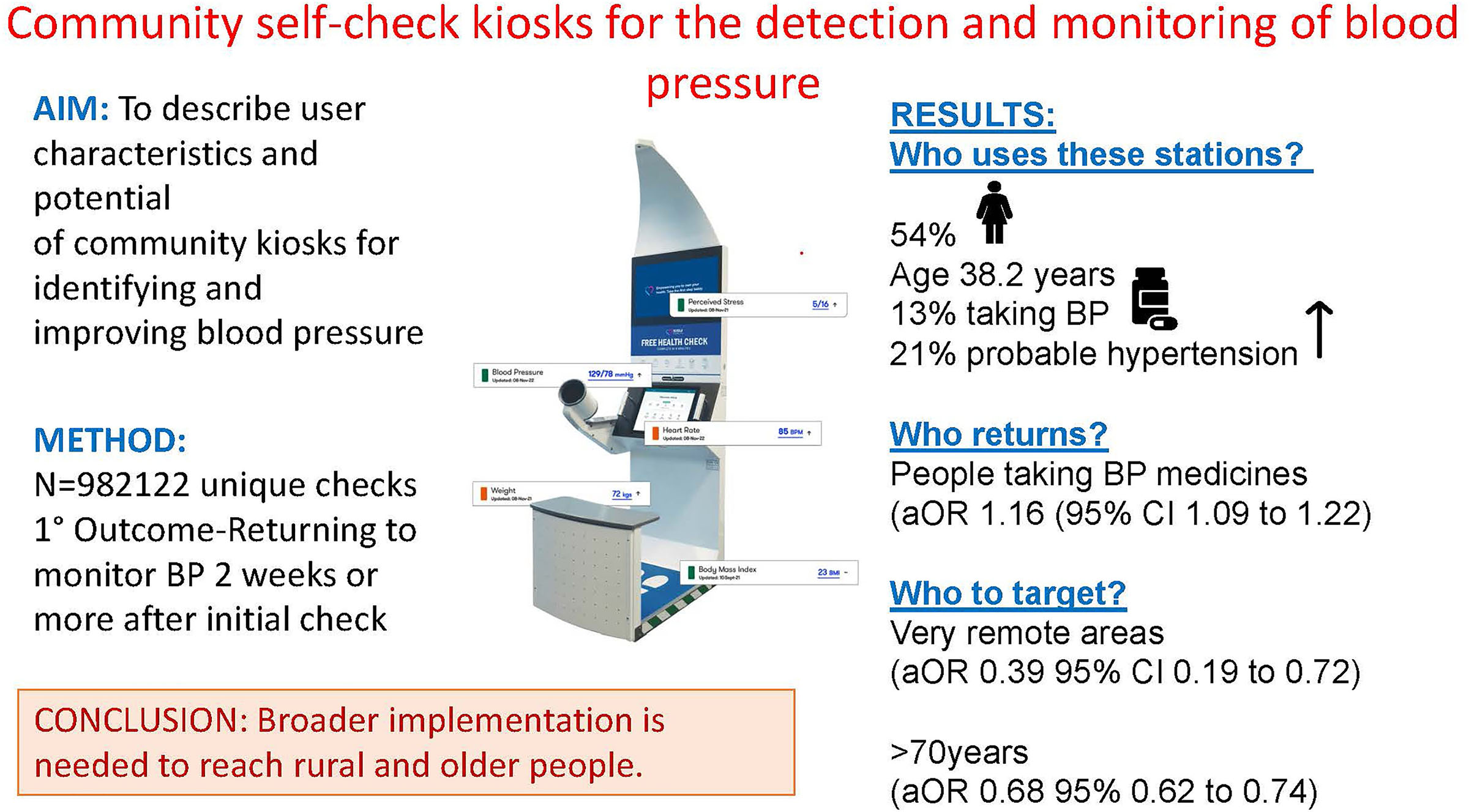
In this work we want to know ... whether people used free pharmacy health kiosks to monitor their blood pressure, because regularly checking your own BP can help improve long-term control. We wanted to see who used the kiosks and who came back for repeat checks.
We did… an observational study of nearly one million health checks from over 400 Australian pharmacy kiosks (2018–2020), comparing first-time and repeat users.
We found…
· 13% returned for another check.
· 1 in 5 had possible high blood pressure.
· Older adults, people in very remote areas, and smokers were less likely to return.
· People already on blood pressure medication were more likely to return.
This is important because… community kiosks are usually free and can make BP self-monitoring easier and help people pick up high blood pressure earlier. To maximise their impact, they need better reach among older adults and people in rural and remote areas.
A functional dentition was associated with a lower risk of incident cardiovascular disease in Australian Women
+ Click on the image to expand
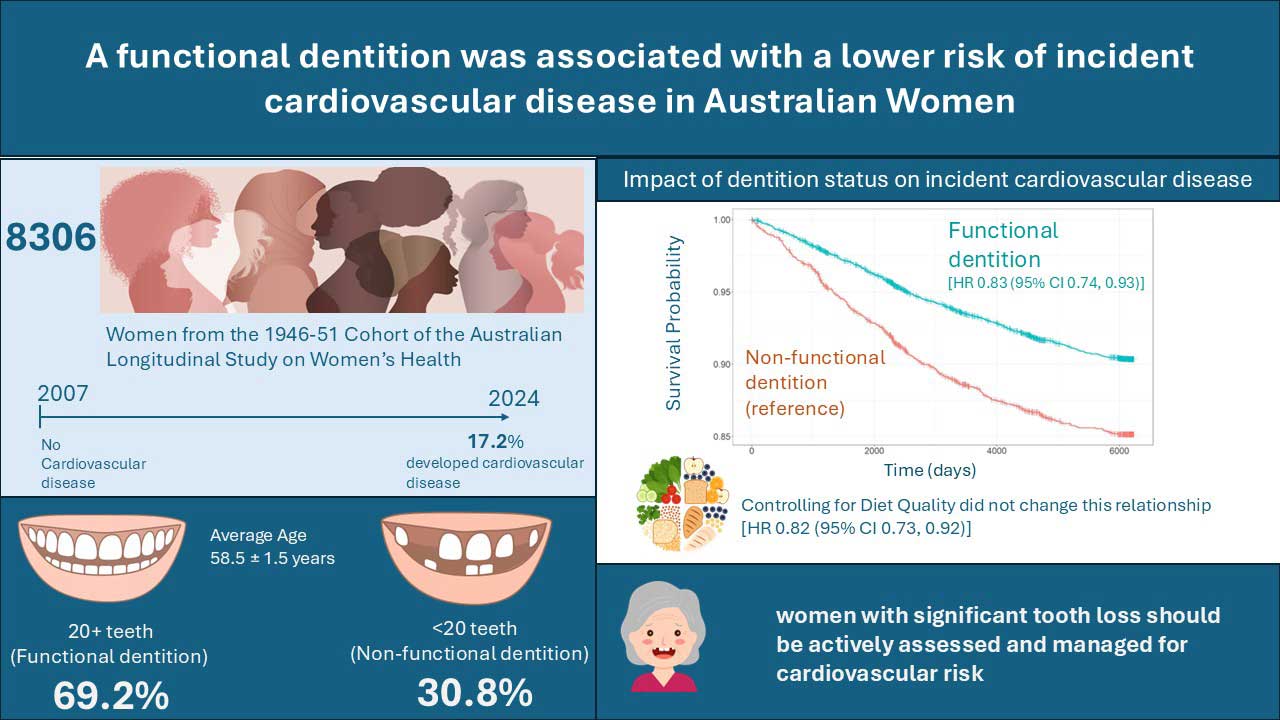
In this work we wanted to know…if maintaining a functional dentition (at least 20 teeth or more) reduced your risk of developing heart disease.
We did…an analysis of population -based data of Australian Women born between 1946-51. We used data from survey 5 (2007) to assess tooth loss and diet quality. Cardiovascular disease was determined from linked data over a 17-year follow-up period (2024).
We found…that in women, mean age 58.5 years, 69.2% had a functional dentition. During the 17-year follow-up period 1432 (17.2%) women developed incident heart disease. Compared to women with a non-functional dentition (<20 teeth) those with a functional dentition had a lower risk of incident heart disease 15.5% vs 21.1% respectively. Controlling for diet quality did not change this relationship.
This is important because… Women with significant tooth loss should be actively assessed and managed for cardiovascular risk.
How artificial intelligence (AI) is currently being used in primary care
+ Click on the image to expand
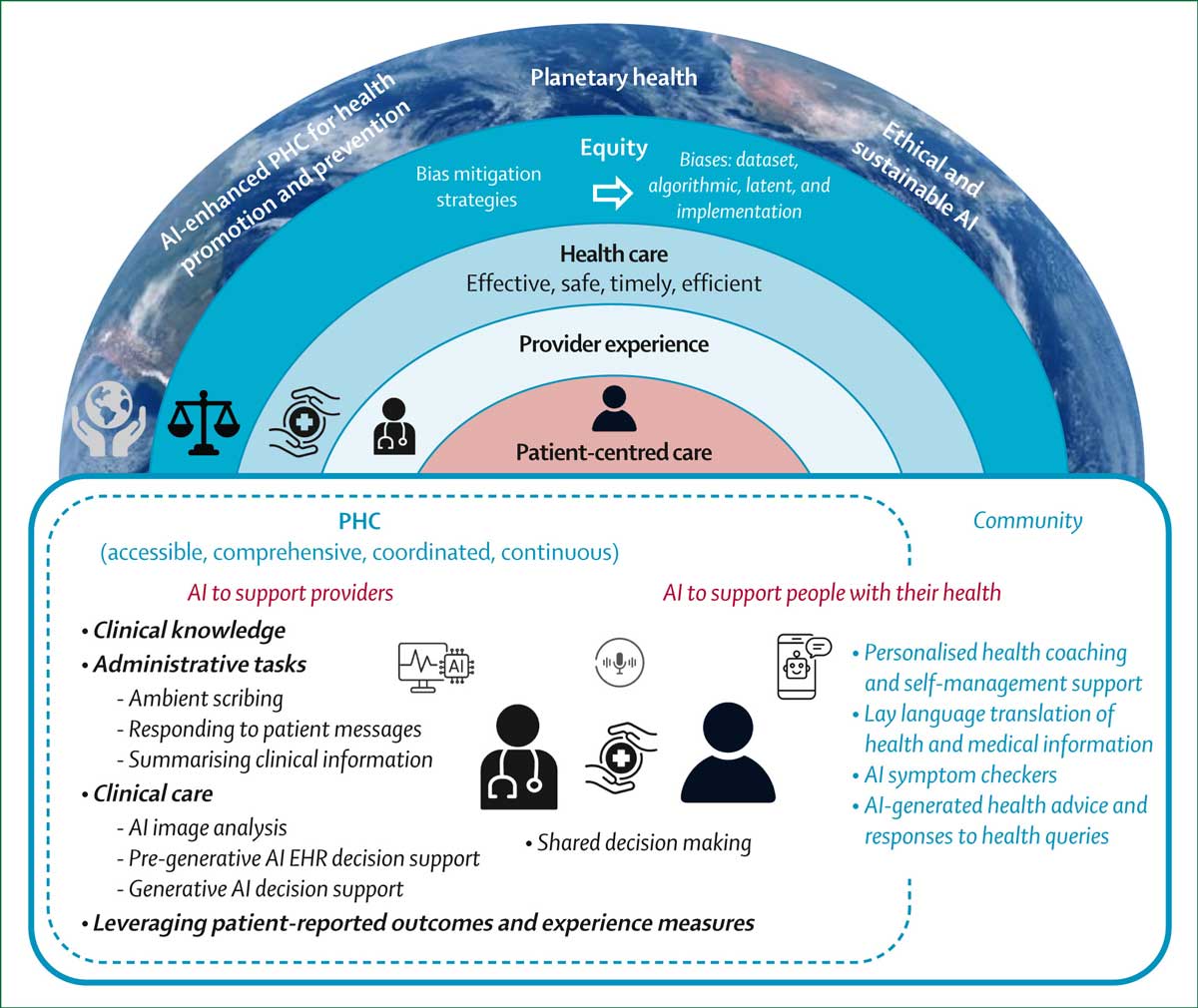
In this work we wanted to know…how artificial intelligence (AI) is currently being used in primary care (general practice), what it can realistically do, what risks it brings, and how it might change care for both clinicians and patients. The authors wanted to understand whether AI can improve care—and where it might create problems.
We reviewed a large amount of published studies, reports, and trials about AI in primary care. They looked at AI tools for doctors (like AI scribes, decision support, and knowledge summarisation) and AI tools for patients (like symptom checkers and chatbots). They also examined the effects of AI on the quality of care, including safety, fairness, patient experience, and environmental impact.
We found…
- AI is already being used in primary care, especially for tasks like writing clinical notes, summarising information, answering questions, and helping doctors manage messages.
- Some benefits are clear, such as reducing paperwork for clinicians, improving access to health information, and helping with screening tests like diabetic eye checks.
- But many risks are also clear.
- AI can make mistakes (“hallucinations”), leave out important details, or introduce bias—especially for people from underrepresented groups.
- Tools like symptom checkers are often inaccurate and can give unsafe advice.
- AI systems trained on one population may not work well for another.
- Overreliance on AI could harm trust, quality of documentation, or clinician decisionmaking.
- Realworld evidence is limited. Many AI tools are being used before they’ve been properly tested.
- Environmental costs—such as high electricity and water use—are also a concern.
This is important because…
- AI is already entering primary care faster than it’s being evaluated, which could impact patient safety, equity, and trust.
- Health systems around the world are under pressure due to workforce shortages and increasing demand. AI could help—but only if it’s safe, fair, and properly regulated.
- Without careful oversight, AI could make inequities worse by working poorly for people who are already disadvantaged.
- Primary care providers and the public need better training to use AI safely, and policies need to catch up with the technology.
Multilingual Video Eduction for Hospitalised Patients with Myocardial Infarction
+ Click on the image to expand
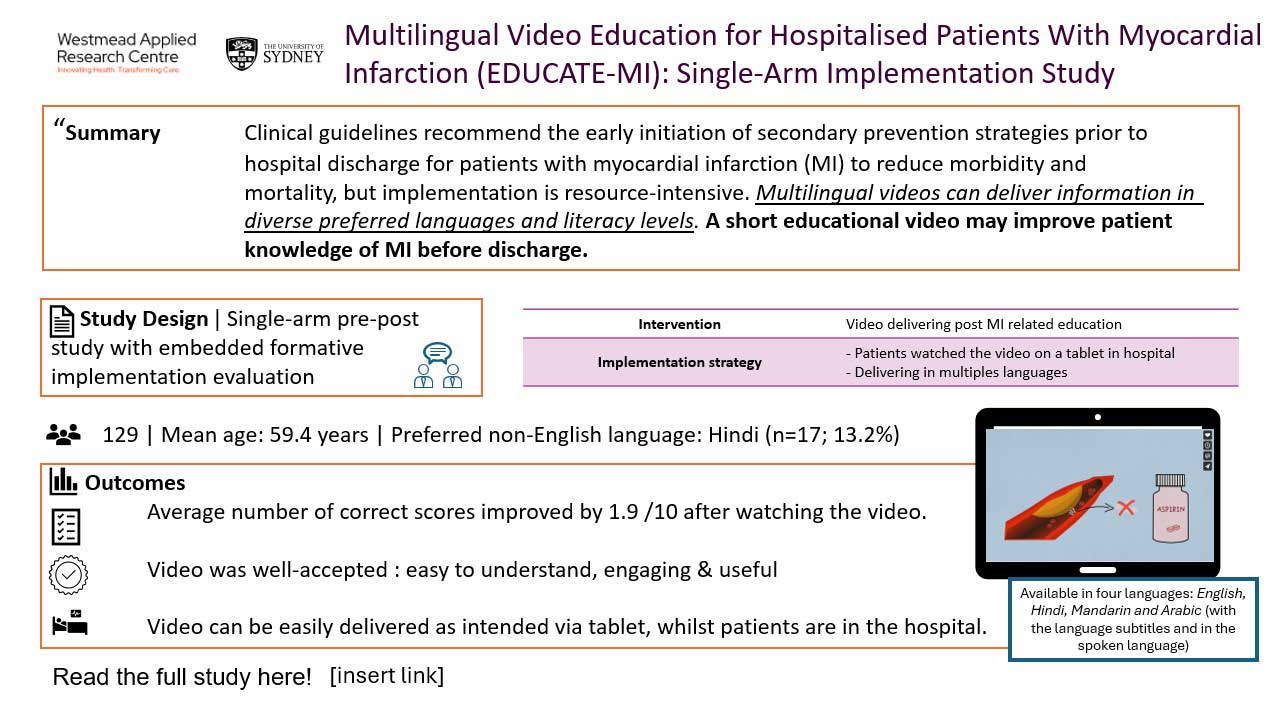
In this work, we wanted to know whether educational videos for patients with heart attacks can improve their knowledge. We also wanted to know if they can be given before they leave the hospital.
We did a study that tested if patients' knowledge improved after watching a video in their preferred language.
We found videos improved knowledge of what a heart attack is and medicines.
This is key because people from different backgrounds are all told about what happens next after a heart attack. 5-minute videos in preferred languages can be helpful to tell patients about their heart.
Westmead Applied Research Centre (WARC)
The Westmead Applied Research Centre (WARC) was established by the University of Sydney in collaboration with the Western Sydney Local Health District, to specifically address the causes of chronic disease, with a focus on translational research that addresses the specific needs and circumstances of patients in western Sydney.
WARC is made up of multidisciplinary experts who aim to prevent chronic diseases and their progression by focusing on applied clinical research that will:
- help patients self-manage their condition/s
- provide education and support through digital health interventions.
Our aim is to create, evaluate and apply innovative clinical and digital health approaches to reduce the burden of cardiometabolic and other chronic conditions. Our core values are innovation, frugality, co-design and value-based care.
Friends of WARC
Recognising the critical role consumers play in setting research directions and educating through lived experience, the Friends of WARC was created to form a link between the community, researchers and research at WARC.
The Friends of WARC engages with interested community members - including people with lived experience of cardiovascular disease, carers, and community leaders - to represent the views of the community in the research of WARC by providing advice and sharing their experiences, interests and viewpoints on our research.
As such the Friends of WARC plays a key role in contributing to research that aims to have a significant impact on the lives of people living with a chronic disease.
Community members engage with WARC through:
- interactive events to hear about our current research
- panels to discuss the role and impact of the consumer in research
- direct involvement in a research project from preparing research applications and planning a research project or as a participant in a clinical trial.
Join Us
If you are interested in helping to shape the future of our research join the Friends of WARC by filing in the form using this link.
https://redcap.sydney.edu.au/surveys/?s=LRN8K3T89FFX4HD8
As a member we will: keep you up to date on our research through emails and newsletters; invite you to events, presentations and workshops and; contact you about opportunities to be directly involved with our research.